Thinking about doing Everest Base Camp Trek but worried about the weather conditions?
You're not alone.
In this post, we'll share with you everything you need to know about Everest Base Camp weather conditions, how it impacts your journey, and which time of the year better suits your trip.
So, without any ado, let's dive deeper.
Factors Affecting Weather in the Everest Region
Several factors play their role in determining the weather of a particular place at a given point of time.
Here's a list of factors affecting weather in the Everest region:
Temperature
Numerous factors influence the weather in the Himalayas. One among them is temperature.
As you ascend and move away from sea level, every step on the trails brings a noticeable drop in temperature, making both day and night chilly. That’s why taking care of your body temperature is the must, if you don't want to get caught in life-threatening conditions.
But how?
Here's the answer:
When you arm yourself with the right gear, you're all set for the high-evelvation trek. The sleeping bag, down jacket, and thermals all will keep you warm enough to keep such illness away.This way, you'll avoid yourself from potential health complications that might result due to low temperature.
But, the reality is, you don't have to summit Mount Everest to catch hypothermia or frostbite.
These risks exist on the way to Everest Base Camp, if temperature plunges and you're ill-prepared.
FYI, the initial temperature in the lower part of the Khumbu region may not be as harsh as in the upper part, but as you climb higher, it bullies you. Yes, you read that right! But fear not.
Equipping yourself with the right gear is like carrying all the required ammunitions while going into the battlefield. You're now well-prepared to handle any weather conditions you might encounter on the way to the base camp due to fall in temperature.
Wind
Wind is the next crucial factor that affect the weather of the Himalayas. Interestingly, some of the world's most powerful and coldest winds occur during winter in various regions across the globe.
That's why, we can link frigid temperatures with formidable winds. And the Himalayan Range is no exception to this association.
Let me break this down for you:
In winter, northern jet streams head southward, ushering in high and harsh winds. From late September to March, particularly in the Cool Temperate zone (lower part of Khumbu region), the wind displays its force.
It gains momentum from late September and intensifies as March approaches. Believe it or not, the speed of the wind occasionally may even reach up to 20 KM/Hr, blowing your sunhat, at times.
Similarly, in the high mountainous regions, the winds peak from late November to March during winter. This wind originates from Siberia and Mongolia and carries bone-chilling colds.
Like it or not, the wind speed typically reaches 30 km/hr. Picture trekking at higher altitudes during this season – it's undeniably thrilling!
Simply put, the winter's freezing cold in itself serves as a clear warning against embarking on the Everest Base Camp journey. And the gusty winds, additionally, exacerbate the challenge, creating extremely unfavorable trekking conditions.
HEADS UP: Certain trail sections en route to Everest Base Camp are highly susceptible to winds, posing a real threat. So, tread cautiously for your safety.
Moreover, due to the impact of global warming, current weather conditions are unpredictable; you can never anticipate the next weather shift. So, be ready for the unexpected, folks!
Snowfall
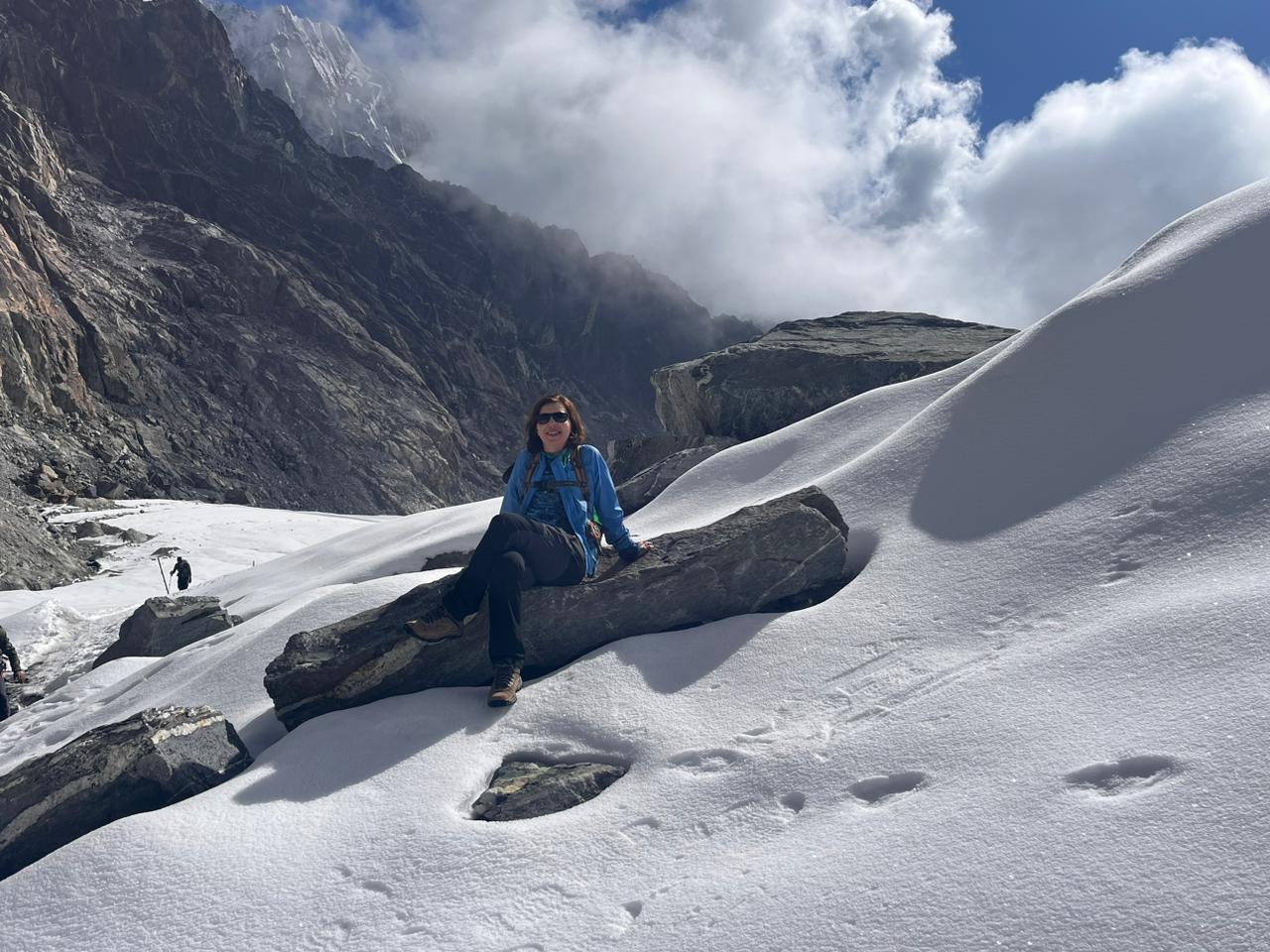
The higher Himalayas often experience minimal snowfall in winter. But, the lower section of the Everest Base Camp path witnesses substantial accumulation of snow in November, making trekking a quite challenging.
Despite people trekking during this period, massive snowfall can lead to the closure of paths to higher passes.
And the result?
This may cause prolonged delays. You'll find yourself in catch 22. And difficulty in evacuation.
That's why it's prudent to avoid trekking from late December to early February as heavy snowfall blocks the path for an extended period.
In case of an emergency situation, it'll be difficult for the third party to come to your rescue in such a harsh condition.
Rainfall
As the monsoon kicks in across India, a moist breeze drifts northward, making its way into Nepal from the south.
Typically, the monsoon sweeps into Nepal from the southeast. It brings heavy rainfall, thunderstorms, and gradually moves towards the west.
Furthermore, the upper part of the Everest region gets less rain compared to the lower parts. So, brace yourself for significant rainfall in the lower areas of the Khumbu region, from June all the way to late September.
But the catch is, the continuous rainfall turns the trails muddy and slippery, making trekking a bit tricky. No matter how solid your hiking boots are, slipping becomes a real concern, risking your safety.
That's why you need to be extra careful if you happen to trek during monsoon. Also, let's not forget the dangerous landslides that often accompany heavy downpour, posing a serious threat if you're not careful.
If all that isn't enough, the humidity in the Temperate zone adds to your discomfort, makeing summer an unpleasant time for trekking.
What Weather Best Suits Your Journey in the Everest Region
What weather best suits you depends on your personal preference and your deepest motivation behind the trip. No matter what your preference, we'll have you covered.
Here are different seasons and what they hold for you during your trip:
Spring And Autum
Let's get real: Most of you embark on the journey with a drive to experience the mighty Himalayas, reconnect with nature, mental detox, and have fun. And that makes sense!
After all, nothing is more precious than that deep feeling of well-being and happiness. In order to achieve this objective the ambience should be amazing.
The ambience can only be amazing when the days are brighter, the temperature is mild, the visibility is rich, and little to no rainfall and snowfall on the way.
And needless to say, what better option do you need other than Spring and Autumn to fulfil your expectations?
Yes, we mean it. These seasons offer you rich visibility, clear skies, dry trails, and warm days, creating perfect ambience for a complete immersive experience. Sounds exciting, right? And it is.
Winter and Monsoon
While many seek the joy of reconnecting with nature during their trek, others view it as an opportunity for a personal test.
Put differently, for them life is a kind of test or an exam. They want to put themselves to the test and find out how resilient they're in such extreme situations.
Not only that, they firmly believe the only way to grow in life is to get out of comfort zone and take challenges head-on.
In fact, they not only believe it, they live by it. And there is no better option for them other than embarking on a journey during early-December or mid-February (Winter but not January as it's too cold).
Or, Monsoon can also be a season for someone who is looking for daring adventure. Imagine the greasy and slippery trails coupled with intermittent rainfall!
A real challenge for the grownups!
But, I recommend not to trek the Everest region during monsoon as it's more than overwhelming.
You can check out other destinations in Annapurna or Mustang region as these places receive comparatively low rainfall during the same period
What to Pack Based On the Weather Consitions?
Irrespective of when you trek, there are certain things you must carry for a smooth adventure experience.
In fact, embarking on the journey without these things will result in a poor experience.
And we're sure you don't want to have a poor experience, do you?
That's why while packing for trekking in the Himalayas, always make sure as if you're packing for the battlefield, so that you don't miss out on any essentials.
Here's the list of all the essentials you should pack for trouble-free trip:
Common Essentials For All Seasons
Essentials For Spring Season
Essentials For Monsoon Season
Essentials For Autumn Season
Essentials For Winter Seasons
Let's Wrap This Up
Now that you've read this post, you should have a clear picture of Everest region’s weather conditions, how to prepare, and when to trek.
Approximately 44,000 trekkers from around the world conquer Everest Base Camp each year.
And you can too!
Want to join the tribe of adventure-seekers for better well-being and a productive life?
SIGN UP FOR A NEWSLETTER
So, that's it for today, guys. See you in the next post. Till then….
Accept The Challenges. Push Your Limits. And Keep Your Quest For Greatness Alive.